I travel extensively as part of the United Nations, seeing the best and worst in the world, analyzing the data and advising the decision makers that impact people's lives. This blog contains my visions for improving the US and the world
The Lancet has just released news that the global maternal mortality has declined - these results are controversial in that other estimates don't agree. I am not going to discuss the controversy surrounding the data as the debates focus on developing countries, not developed countries like the US and Western Europe
One area that struck me was the US maternal mortality rate. This is the chances of a women dying due to pregnancy.
The US always did poorly compared to the rest of the developed world...but the news is getting worse. According to the Lancet article, the US maternal mortality was 13 deaths per 100,000 live births in 2000 (confidence interval 12-15) but in 2008 had RISEN to 17 deaths per 100,000 live births. To put that in context, this rate is more than twice the estimate for Canada, Japan, Australia, South Korea, Singapore and 21 of the 22 Western European countries.
Image taken from The Lancet, Early Online Publication, 12 April 2010
Maternal mortality for 181 countries, 1980—2008: a systematic analysis of progress towards Millennium Development Goal 5. Margaret C Hogan MSc a b, Kyle J Foreman AB a, Mohsen Naghavi MD a, Stephanie Y Ahn BA a, Mengru Wang BA a, Susanna M Makela BS a, Prof Alan D Lopez PhD c, Prof Rafael Lozano MD a, Prof Christopher JL Murray MD
On my trip to Taiwan I was reminded of one of the striking disconnects between the US and Asia in dealing with the H1N1 virus. Asia had been devastated economically only a few years earlier by the SARS epidemic and so acted promptly to try protecting its citizens by screening arriving passengers and quarantining those with fevers (and sometimes the passengers who unfortunately sat nearby). The idea is simple, if you are sick, you should not be interacting with citizens until you are less likely to spread infection. Of course, screening before the passenger got on the plane would have been better but it was a step towards protecting public health. Quarantines have existed in the US before - quarantine law began in Colonial America to combat smallpox and isolation facilities were at every port of entry up until about 40 years ago.
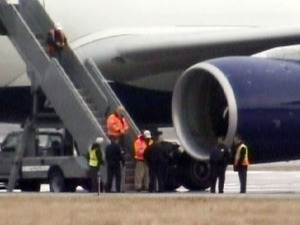
In the last year, when I arrived in China, Singapore, Thailand and Taiwan they all measured the temperature for arriving passengers non-invasively using temperature screens. While the Center for Disease Control (CDC) was vigilant in tracking the progress of the virus, there were no restrictions placed on travel and little action was taken to limit the risk of infection. Given that the US was the country with the most cases and deaths globally it is a reflection on our society that we chose to not screen incoming passengers.
The United States’ decision to not screen its outbound or inbound passengers reflects the national values and how America balances national health with economic expediency. Other countries risked sacrificing short term tourism and international business opportunities in order to minimize the chance of transmission. The United States chose to neither minimize further internal risk of transmission by screening and quarantining incoming passengers, nor to protect other countries from receiving infected visitors.
Passing through the Taiwan immigration I was reminded of how critical is the human element in security.
Many of us have worked in office buildings requiring electronic ID’s to enter…now admit how many of you have held a door or let someone in who didn’t have a badge that you didn’t know personally. Many people don’t want to feel rude or have an uncomfortable situation by saying, “I’m sorry but you don’t have an ID, please go to the security office. I can call them for you if you’d like” so we take the easy road of simply letting an unknown risk into our workspace.
Immigration and customs areas around the world continuously struggle with questions of how to keep the bad elements out, whether they are dangerous weapons, drugs or people intent on harm. The United States relies on customs screenings, passenger list screenings and other security measures to try filtering away the danger yet it isn’t perfect (see Christmas terrorist attempt over Detroit). No system is perfect. We will continue to be attacked from outside and inside by terrorists yet in the case of passengers arriving by plane I recall Israel having an excellent system which relied significantly on highly trained interviewers.
We Americans would object to the “interrogation-style” Israeli interviews but they are effective, much more than someone asking if I packed my bags and whether they were with me at all times. I recall being a student in Israel for a semester in college, returning to the US for a week and then having to reenter Israel to finish the semester. The interview I received upon trying to re-enter Israel was a complete grilling of “Why were you here the first time?”, “Why did you leave?”, “Why are you returning?”, “Who did you see when you were away?” and “Why do you barely speak Hebrew since you claimed to have bee in school here for 2 months learning the language?” My response, “I’m not very smart” elicited a momentary smile by the Israeli interviewer before she gritted her teeth and continued the questioning.
The human element of security is critical. It is slower, takes far more training and skill than someone looking at a video scan of my bags, but it is very powerful. There is little question in my mind that had Richard Reid or Abdul Abdulmutallab been grilled by my Israeli interviewer before boarding, they never would have made it on the plane. Yes, some terrorists will always slip through, but we should seriously consider investing the time and money to learn from Israel to leverage the human element of security.
As I travel to Taiwan on my vacation, I passed through Tokyo's Narita airport. The airport is clean, efficient and well organized, much like Japan in general. My eyes are always scanning to see what can America learn and adopt
A few things I observed are: (1) Transit passengers can simply pass arrive at one gate, pass through a security screen and go to their next gate. It seems obvious but the United States requires transiting passengers to obtain a visa. Why? Great question! I have never been able to explain this to friends of mine who are simply passing through a US airport on the way to South America. These transit passengers aren't passing through immigration to enter the country so why harass them for a document. We can pretend this makes us more secure but we are jsut pretending.
(2) Don't waste people's time on shoe removal! Richard Reid was an inept want-to-be terrorist who clearly didn't want to succeed (note: if you want to actually light your shoe bomb or underwear on fire to blow up a plane you might risk igniting in the bathroom where your success rate will be much higher though you may be at risk of the $500 non-smoking fine if the bomb fails to ignite). Shoe removal is just one of the many “smoke and mirror” type security measures we routinely do in the United States which add no value and simply waste time. Anything I can hide in my shoe I could also hide in my socks or underwear...now we know that there are very smart people in the US government who also realized that many people wear socks and underwear. So why are we continuing this shoe removal policy? The cynic in me believes that is is merely to make it seem like we are responding to security threats though few people, citizens or terrorists are impressed. Add security measures that add value (in my next post I'll discuss that)
(3) Toilets equipped with warmers, water sprays and deodorants...I think you have to experience this for yourselves to understand.
In visiting MOMA yesterday with my 5 year old niece, she was thrilled to see the Warhols, Pollacks, and Rothkos but she had serious issues with Marina Abramovic’s exhibit The Artist is Present which consists of the artist sitting at a table without talking the entire day.
“Why is this art?” I was asked, to which my best answer was, “art can mean many things, it used to refer to creating something very skillfully that would make people think and feel, but now often a concept can be art”
“Anyone can sit and stare. It looks silly and doesn’t take any special skill!”
While I agreed, I respected Marina’s incredible talent at self promotion, after all she is getting handsomely paid by one of the most reputable museums in the world to do nothing more than my class does every time I teach. “Some people believe this exhibit is a great example of performance art, where the artist makes people feel through her work and it makes us discuss the meaning of art.”
“I think it’s dumb, worse than the New Museum show with the sleeping girls. Why is she in the museum?”
I realized that people who consider themselves intelligent have choices when viewing this exhibit, they can let themselves feel the experience and not try to analyze it, they can get angry or jealous about what feels like a complete scam, they can pretend to appreciate it by intellectualizing the event to their friends or they can see it like my niece who followed, “Can we go to see the Picasso? He’s so special!” but before I could reply she asked, “Where does Maura pee?”
I resisted the temptation to explain that the artist’s dress is probably covering up a bucket that lets her relieve herself by replying, “That’s what makes her so talented, bladder control.”
Coda: Those in the art community who vehemently defend this work may truly believe it is meaningful art or they may simply lack to self-confidence to appear “unsophisticated”. I suspect many fall in the latter bucket. Generally in life we sometimes make false arguments out of fear of the bad impression that our honest opinion or true motivation will make. No politician can state, “I only care about those who contribute to my campaign or vote for me and I sure as hell know that the uninsured won’t vote for me and will never give me a penny” so they present arguments that appear as intellectualized distractions, taking people on wild goose chases on topics that range from flag burning to Willie Horton to welfare madams to how deeply someone bows when visiting a foreign dignitary to inadvertent cursing during signing ceremonies rather than talking openly and honestly about the real issues in society and true motivations of those with the power and influence to make changes.
Howard works as a statistician and health economist for the United Nations. He has been a lead modeler on a number of key United Nations projects including the High Level Task Force on Innovative Financing. He is credited with being the lead developer of the tool used for costing the health-related Millennium Development Goals. He is also an adjunct professor at SIPA at Columbia University.
Prior to joining the United Nations, Howard ran Analytic Solutions LLC, which provides consulting services in designing, developing and modeling data. This work also included teaching data mining and modeling techniques for major international corporations and foreign governments. Prior to that, he was a Director at Capital One, where he led teams of statisticians, analysts and programmers in operations and marketing.
Howard is the author of over 35 scientific articles and book chapters in areas of applied statistics and, health economics.
He received his BS from Binghamton University in Applied Physics and a Masters in Statistics, along with a Ph.D. in Biomedical Engineering from Johns Hopkins University.




 Posts